
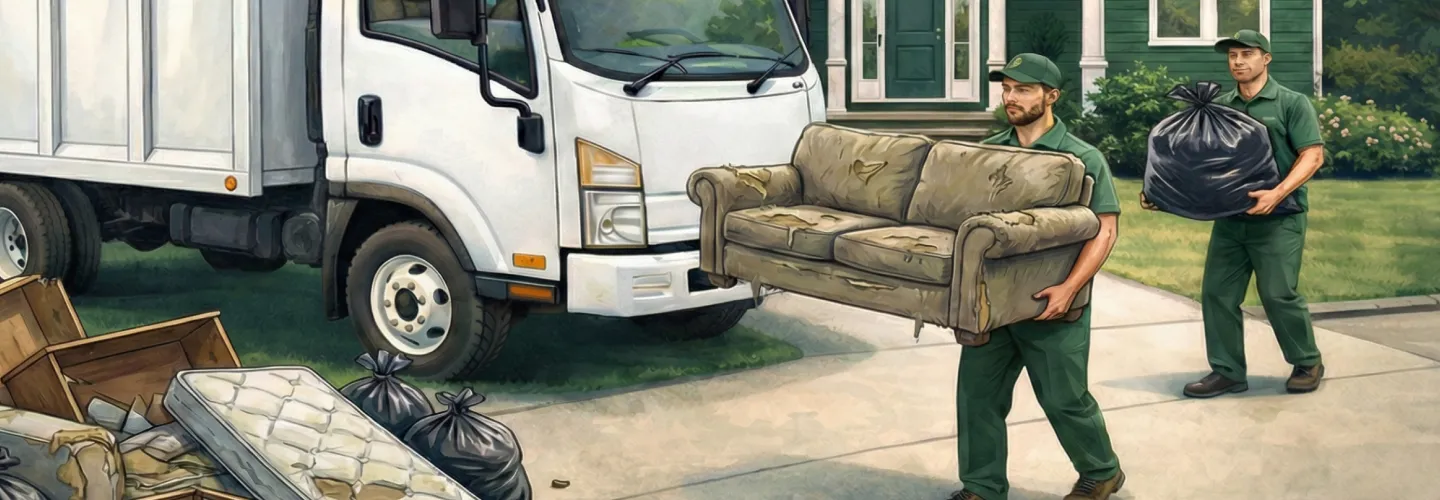
Douglasville Construction Waste Management Services
Choose us for your construction waste management needs and experience hassle-free, eco-friendly disposal that keeps your project on schedule and your site safe—trusted by contractors across Douglasville for our commitment to sustainability and customer satisfaction.
Get a Free QuoteOur Douglasville Junk Removal Services
Construction Waste Management in Douglasville, GA – Local Service Guide
Effective construction waste management in Douglasville, GA, is essential for maintaining clean neighborhoods and supporting sustainable growth. Whether you’re renovating a home in Chapel Hills, clearing out a basement in Tributary, or managing debris from a commercial build near Arbor Place Mall, local regulations and logistics play a key role. For residential items like furniture, appliances, or hot tubs, disposal often coincides with seasonal cleanouts, moving, or upgrades. Many residents opt to donate usable items or recycle scrap metal, while larger items may require special pickup or drop-off at designated facilities. In residential spaces, garage and yard waste removal peaks after storms or during spring and fall cleanups, with frequency depending on property size and tree coverage. Commercial projects in Douglasville’s business districts demand timely, discreet waste removal to minimize disruption, with volume and scheduling tailored to each sector. Specialty services—such as dumpsters for construction debris or coordinated estate cleanouts—require advance planning and compliance with city guidelines. For more on local rules and resources, visit the Douglasville Public Services Department.
Key Considerations for Construction Waste Management in Douglasville
- Timing your project around local pickup schedules and weather
- Securing necessary permits for large-scale disposal
- Using approved disposal and recycling channels
- Ensuring site access for removal vehicles
- Estimating waste volume accurately
- Coordinating with city services for specialty or high-volume needs
Benefits of Construction Waste Management in Douglasville
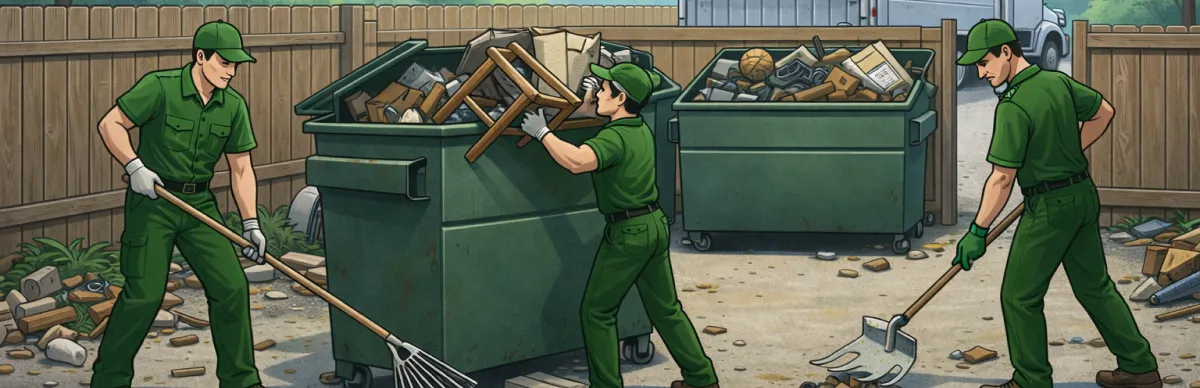
Efficient Waste Removal
Cost-Effective Solutions
Eco-Friendly Disposal
Regulatory Compliance
Improved Site Safety
Streamlined Project Timelines
Coordinating Construction Waste Disposal with Douglasville’s Public Services Department
Effective construction waste management in Douglasville requires close coordination with the city’s Public Services Department, which oversees solid waste programs and transfer station operations. Contractors and residents must adhere to local requirements for debris disposal, including:
- Scheduling bulk waste drop-off at the city transfer station during posted hours (typically Monday–Saturday, 7:00 AM–5:00 PM)
- Obtaining a resident permit or proof of address for facility access
- Paying disposal fees based on weight or volume (fees may vary; check with the department for current rates)
- Separating recyclable materials from general debris as mandated by city policy
- Following item-specific preparation guidelines (e.g., no plastic bags, debris must be containerized)
Failure to comply with these requirements may result in denied access or code violations. For up-to-date schedules and accepted materials, consult the city’s official resources.
Douglasville Public Services Department
8578 Club Drive, Douglasville, GA 30134
Phone: (770) 920-3005
Official Website: Douglasville Public Services Department
Understanding Douglasville’s Construction Waste Code Enforcement and Permit Requirements
Construction and demolition projects in Douglasville are subject to strict code enforcement and permitting processes to ensure safe, compliant waste handling. Key requirements include:
- Securing building permits for renovations or demolitions through the Building Division
- Coordinating with Code Compliance for property maintenance and debris abatement
- Adhering to right-of-way regulations for removal vehicles and equipment
- Observing noise ordinances and operating hour restrictions (typically 7:00 AM–7:00 PM)
- Obtaining special approvals for projects in historic districts or HOA-governed areas
Permit applications must be submitted in advance, with processing times varying by project scope. Non-compliance can result in fines or project delays. Always verify current requirements with the appropriate city department.
Douglasville Building Division
6701 Church Street, Douglasville, GA 30134
Phone: (678) 449-3054
Official Website: Douglasville Building Division
Meeting Environmental Compliance and Recycling Mandates for Construction Debris in Douglasville
Douglasville enforces environmental regulations that require responsible disposal and recycling of construction waste. Contractors must comply with both city and state mandates, including:
- Separating recyclable materials (such as metal, concrete, and wood) from landfill-bound debris
- Prohibiting disposal of hazardous materials (e.g., paint, solvents, asbestos) in regular waste streams
- Utilizing designated recycling centers for electronics and appliances
- Following Georgia Environmental Protection Division (GA EPD) solid waste rules (GA EPD Solid Waste)
- Participating in city or county hazardous waste collection events for restricted items
Proper documentation of waste diversion and recycling is often required for permit closure. Violations may result in penalties or project delays. For detailed recycling guidelines, consult local and state resources.
Safe Handling and Professional Standards for Construction Waste in Douglasville
Safety is paramount when managing construction waste in Douglasville. All workers and contractors must observe professional standards to protect both personnel and property. Key safety protocols include:
- Using personal protective equipment (PPE) such as gloves, masks, and safety goggles
- Following OSHA guidelines for heavy lifting and equipment operation
- Conducting lead paint and asbestos surveys in pre-1980 structures
- Ensuring proper containment of dust and debris to prevent stormwater contamination
- Maintaining clear access routes for emergency vehicles and site personnel
Adherence to these standards reduces the risk of injury and environmental harm. For additional safety requirements, refer to federal OSHA Construction Standards and city code enforcement policies.
Douglasville Code Compliance Division
6701 Church Street, Douglasville, GA 30134
Phone: (678) 449-3054
Official Website: Douglasville Code Compliance Division
What Neighborhoods Do We Serve Throughout Douglasville, GA?
- Downtown Douglasville: Features historic commercial buildings and older homes, often requiring special permits for debris removal and careful navigation of narrow streets.
- Chapel Hill: Predominantly residential with newer single-family homes; wide driveways facilitate access, but HOA rules may restrict waste placement and collection times.
- Arbor Station: Multi-family complexes and townhomes present challenges for large vehicle access and require coordination with property management for debris staging.
- Lithia Springs: Mix of industrial and residential properties; industrial sites may generate large volumes of construction debris and require compliance with additional zoning regulations.
- Anneewakee Trails: Gated community with private roads; advance scheduling and HOA approval are necessary for construction waste removal.
- Stewart Mill: Suburban neighborhood with moderate street widths; curbside collection is common, but parking restrictions may apply during active construction.
- Sweetwater Creek: Proximity to parklands and waterways necessitates strict adherence to environmental protection protocols and stormwater management during debris handling.